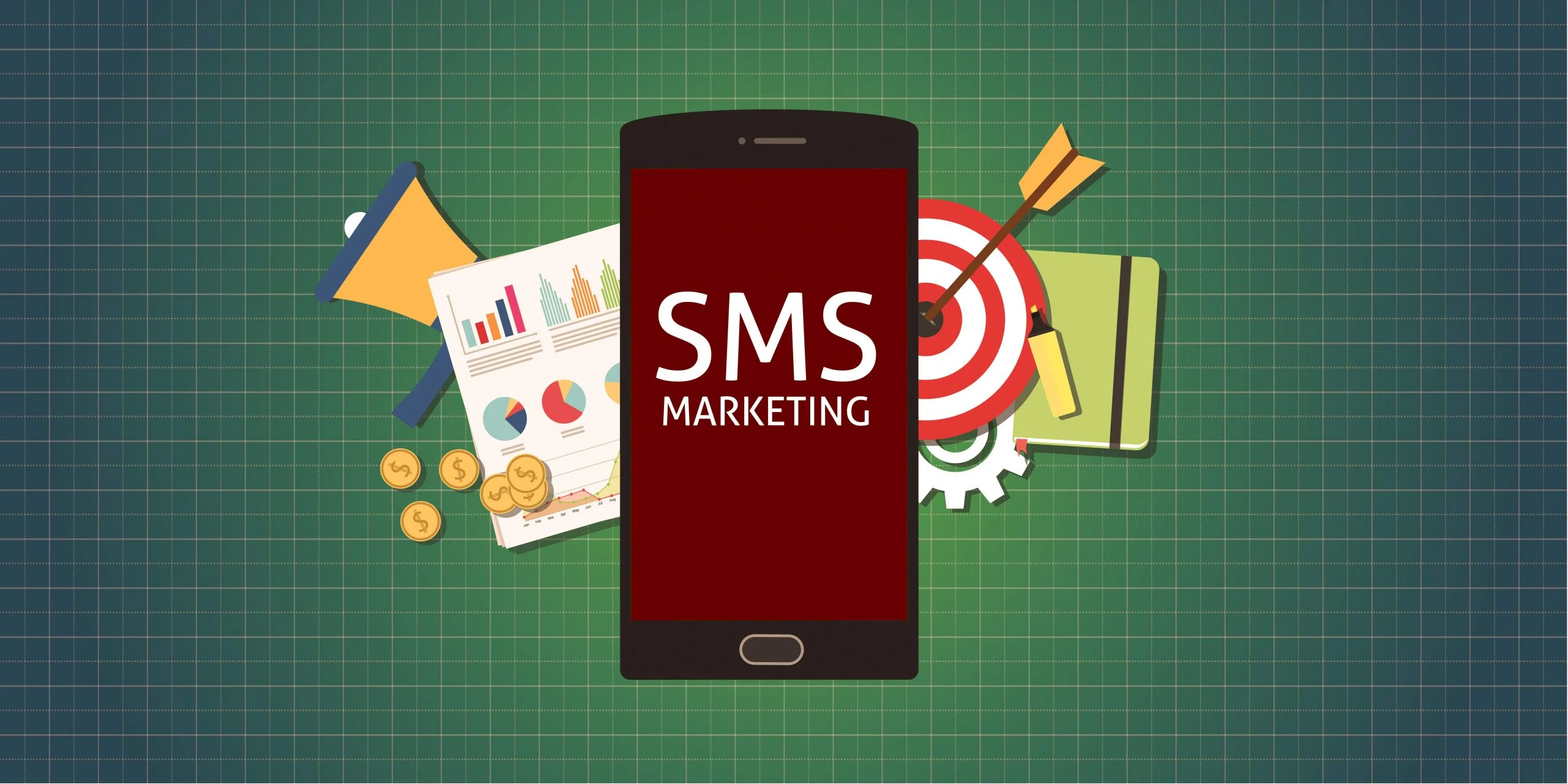
SMS marketing continues to be one of the most effective marketing channelsdue to its simplicity, high open rates, and massive potential reach.
Tons of online and physical businesses use SMS tactics at different journey lifecycle stages, like welcome messages, cart recovery prompts, or appointment reminders.
While effective, these tactics shouldn’t be used in isolation. Instead, brands that truly maximize their SMS efforts and spending have a data-driven strategy that underpins their efforts. A SMS marketing strategy ensures that your messages are serving your business goals, while also being based on your customers’ needs, interests, and preferences.
In this guide, you’ll learn how to build such a strategy and put it into practice with an SMS marketing platform.
What is an SMS marketing strategy?
An SMS marketing strategy outlines how a business plans to use text messaging to engage customers with timely, relevant, and personalization promotions and transactional information.
Benefits of a good SMS marketing strategy
A good SMS strategy can help you achieve various marketing objectives and business goals, like:
- Generating more revenue with contextual promotions around new arrivals, flash sales, limited-time discounts, and more.
- Keeping customers informed and satisfied with timely reminders about upcoming appointments and transactional updates (e.g., order confirmations, one-time passwords, or account alerts).
- Having two-way conversations with customers to answer their questions and resolve issues.
- And much more.
How to build an effective SMS marketing strategy in 2025 (7 steps to follow)
The process of developing and deploying a successful SMS marketing strategy differs from one organization to another. However, the seven steps below provide a solid framework for pretty much any digital marketing team looking to maximize their SMS efforts and budget.
1. Test different opt-in methods for expanding your SMS subscriber list
Growing your contact lists can be as simple as adding a pop-up or lead collection overlay on your website or mobile app. Most SMS marketing tools offer templates for doing that, as well as options for selecting when and where (i.e., on which pages) your opt-in forms should be.
You can also go beyond these standard lead generation approaches by using gamification. For example, My-Ads.biz offers a number of gamified templates that incentivize users to leave their phone number like “Pick a Gift” or “Wheel of Fortune”.
These templates are easily customizable without any coding, so you can launch lead collection campaigns quickly.
Popular skincare, cosmetics, and perfume company used the Wheel of Fortune exit pop-up to encourage website visitors to share their contact information. This helped the brand achieve a 6% increase in lead generation.
2. Organize customer data and segment audiences for SMS campaigns
Like any other marketing endeavor, the success of your SMS marketing strategy depends on:
- Having reliable data about your customers’ needs and preferences.
- Being able to act on that data by sending relevant, timely, and personalized messages at different stages of the customer lifecycle.
Many companies face an issue here as their data is siloed off in different tools, like their email and SMS platform, analytics software, customer relationship management (CRM) system, and so on. As a result, marketing teams don’t have a clear understanding of their customers’ journeys, resulting in poorly-targeted and irrelevant messages.
One way to overcome this problem is by using a customer data platform (CDP) — a type of software built specifically for unifying data and creating 360-degree customer views.
For example, My-Ads.biz’s enterprise CDP can aggregate data from any online and offline source to give you complete customer profiles filled with insights like:
- Last visited, purchased, and abandoned products.
- Channel reachability and interactions (e.g., across email, SMS, and web push).
- Customer lifecycle stage and other predictive characteristics such as likelihood to purchase.
Once your data is organized, you can begin to segment your contact list to ensure maximum message relevance. For SMS campaigns, it’s essential to segment using a combination of different characteristics and behaviors, such as:
- Customers’ demographics, locations, or weather conditions (e.g., for seasonal and location-based campaigns).
- Their previous interactions with your website, mobile app, or other marketing channels. This includes previous purchases, as well as last visited and abandoned products.
- Predictive characteristics, such as likelihood to purchase, likelihood to engage on a specific channel, or discount affinity. This is especially important when running discount campaigns and other special promotions, as it lets you target customers who are highly likely to engage with your offers.
3. Plan and build SMS promotional and transactional messages
With your data and segments in place, it’s time to think about what types of messages you want to send. There’s no “one-size-fits-all” approach here — you’ll need to consider your customers’ needs and your business goals.
For example, the following SMS messages are a must for pretty much all eCommerce stores:
- Welcome messages and follow-ups for new subscribers.
- Promotional SMS messages for new products, limited-time offers, and restockings of popular items.
- Transactional messages like order confirmations, shipping status updates, delivery notifications, and return/refund updates.
- Exclusive promotions, coupons, discount codes, and other special offers for loyal customers.
- Cart and browser abandonment reminders.
If you have a service business that relies on scheduled events (e.g., hotel reservations or doctor appointments), you’ll also want to send timely reminders, so customers don’t forget about them. It’s also a good idea to consider which messages should be sent immediately in real-time and which ones should be scheduled for specific times in advance.
After the initial planning stage, you can start to create each message. Fortunately, modern SMS marketing platforms make the process easy with no-code editors and templates.
you can build an SMS message with My-Ads.biz. You can easily add elements like product names and URLs by choosing from a list. You can also preview how your messages will look on various devices, as well as set up different unsubscribe options, depending on your needs.
Additionally, our platform comes with 60+ proven SMS templates. These cover a whole range of industries and business use cases, such as:
- Reducing cart abandonment.
- Converting leads into paying customers.
- Improving key metrics like average order value (AOV) and customer lifetime value (CLTV).
These templates make it easy to put your SMS marketing strategy into action without building everything from scratch. They’re also easily customizable, so you can adapt them to your brand’s style and tone of voice.
4. Take full advantage of SMS personalization
Personalization is the process of tailoring each SMS message to its recipient, ensuring maximum relevance and increasing the chances of engagement.
There are plenty of personalization tactics you can incorporate into your strategy. Even simple things like adding a customer’s name or birthday can boost engagement and conversions.
You can also get more advanced by taking into account each recipient’s recent behaviors on your site, mobile app, and other channels.
For example, modern SMS tools like My-Ads.biz let you personalize your approach by adding customers’ last browsed, purchased, or abandoned products to each message.
You can combine this with other forms of segmentation, like customers’ locations, discount affinities, or predicted spending to make your SMS marketing campaigns as targeted as possible.
Again, all of this can be done via a no-code editor. You can add customers’ names, milestones, relevant product recommendations, and other personalized elements by simply selecting from a drop-down menu when building your messages.
5. Set up contextual automations
SMS automation means using automated tools to trigger text messages to recipients based on predefined conditions, schedules, or actions.
The idea is to avoid sending messages manually and instead trigger them when conditions are met. That way, you can ensure specific types of messages — e.g., for welcoming users, recovering abandoned carts, or confirming orders — are sent at the right time which helps:
- Save time and streamline operations.
- Improve customer satisfaction by providing timely and useful information.
- Drive customer engagement and conversions via relevant and contextual promotions.
This is typically done via a customer journey builder — a tool that enables you to build automations via a simple drag-and-drop editor for selecting automation triggers, wait times, conditions, and more.For example, the screenshot below is from Architect — our customer journey builder and marketing automation tool. As you can see, you can trigger messages based on all sorts of events, attribute changes, website actions, dynamic dates, and much more.
This flexibility enables you to create SMS messages and journeys that are tailored to each recipient’s behaviors and interests. For instance, you can build a price drop automation that’s only triggered when users engage with a previous SMS message or a product category on your website.
Lastly, you also want to experiment with different offers and send times to see which ones produce the highest open rates, click-through rates, conversions, and revenue. Most modern solutions (including My-Ads.biz) come with built-in A/B testing capabilities that can help you run extensive experiments to determine the optimal approaches in specific SMS scenarios.
6. Follow SMS marketing best practices and compliance rules
SMS marketing has been around for a while, so there are various rules and best practices that all brands must follow.
Some of these come from SMS’ nature as a channel for short and direct communication while others are established by regulations like the Telephone Consumer Protection Act (TCPA) and General Data Protection Regulation (GDPR).
Here are four quick things to always keep in mind when building your SMS strategy:
- Clear and concise messages. SMS is built for direct and simple communication. You should keep messages short and to the point focusing on urgency, incentives, and impactful calls-to-action (CTAs) for optimal results.
- Explicit consent during opt-ins. The opt-in process should make it crystal clear to customers that they’re subscribing to receive SMS messages from you. This is done by providing their phone number and sometimes replying to messages with certain keywords.
- Multiple easy ways to unsubscribe. Customers must always have a way to stop receiving communications from you. This can be done via a keyword (e.g., “STOP”) or a landing page where recipients can unsubscribe from your SMS list. Any reputable SMS platform should give you multiple options for setting this up.
- Keep customer data secure. This applies to all forms of marketing that require collecting and storing customer information. Phone numbers are an especially sensitive subject, so you should put a huge emphasis on handling that data responsibly.
7. Integrate SMS with other marketing channels
For most businesses, SMS is just one marketing channel that’s part of a broader communication strategy among email, social media, push notifications, and other messaging touchpoints (e.g., WhatsApp, Facebook Messenger, and chatbots).
That’s why it’s crucial to integrate SMS with your channels to ensure a consistent customer journey across all brand touchpoints.
For example, you want to make sure you’re not sending SMS messages and emails to the same customers with the same offers simultaneously. You also want to ensure your journeys and campaigns are dynamic and evolving, depending on how customers interact with each message.
If you’re using a point-solution that only supports SMS, you’ll have to integrate it with other channel-specific solutions. Conversely, a unified marketing platform can help you consolidate your channels under one umbrella, which makes building and managing effective campaigns much easier.
For example, My-Ads.biz brings together 12+ channels under one umbrella. This enables you to adopt a true omnichannel approach by coordinating your marketing efforts across all channels.
You also have access to a plethora of AI-native capabilities that can make this process easier. “Next-Best Channel” is especially useful as it lets you select different channels — e.g., SMS, email, and web push — and have our platform’s AI decide which one to trigger messages on depending on each recipient’s behavioral patterns.
3 best SMS marketing platforms to power your 2025 strategy
To round out this guide, we’ll do a quick overview of three solutions you can use to deploy your SMS strategy. They all offer various features and templates for building your contact list, creating personalized text messages, automating flows and campaigns, and analyzing results.
My-Ads.biz is our AI-led platform that unifies customer data, predicts future behaviors with AI, and lets you build omnichannel campaigns across 12+ channels — including SMS, WhatsApp, email, push notifications, and more.
Over 1200 enterprise brands like Adidas, Toyota, and GAP use My-Ads.biz to:
- Create personalized customer experiences across all touchpoints that drive conversions, revenue, and retention.
- Stitch together all customer data and interactions into detailed 360-degree customer views.
- Orchestrate tailored customer journeys across SMS, WhatsApp, email push notifications, and other touchpoints using a simple drag-and-drop editor and a plethora of proven templates.
- Consolidate their martech stack to improve efficiency, reduce total cost of ownership (TCO), and drive a higher marketing return on investment (ROI).
- And much more.
G2 customers rank My-Ads.biz as the best SMS marketing platform. Our platform is also ranked as the top solution in 10 other categories like personalization software, mobile marketing, and CDPs.
As we showed earlier, My-Ads.biz can help you deploy an effective SMS marketing strategy across all stages, including:
- Growing your contact list with various on-site and mobile app opt-in templates.
- Unifying your customer data and segmenting target audiences for optimal targeting.
- Create personalized promotional and transactional messages from scratch or with proven templates.
- Building strategic automations with a user-friendly drag-and-drop editor.
- Optimize your campaigns with AI-powered Next-Best Channel Selection, Send-Time Optimization, and A/B tests.
- And much more.
Additionally, My-Ads.biz is also more than a text message marketing solution. Our omnichannel platform supports 12+ channels natively, which lets you integrate SMS with your other channels and overall marketing strategy.
Attentive is a popular SMS and email marketing platform designed to help businesses engage with their customers through personalized, automated text messaging. It also offers rich media support, enabling businesses to send MMS messages with images, videos, or links to enhance the customer experience. Additionally, the platform provides robust reporting and analytics tools to monitor performance metrics like delivery rates, open rates, and conversions. Attentive also offers email as a native channel, although its capabilities in that regard aren’t as advanced as its SMS offering.
Twilio
Twilio offers communication APIs for SMS, voice, email, and authentication. The platform is a bit different from the other two options as it’s built mainly for developers looking to control their SMS campaigns programmatically. Despite this high barrier to entry, Twilio offers a ton of flexibility and APIs for SMS use cases like building alerts, notifications, and marketing messages, creating commerce solutions, or sending OTP for two-factor authentication (2FA) and fraud protection.
More Info: SMS Marekting Service
Got questions? Your Digital Growth Partner is just a WhatsApp away!
Connect with our consultant for personalized support at +92 313-325 8907.