Trying to decide between organic vs. paid social media as a part of your social media marketing strategy? We’ll let you in on a secret: You’re probably going to want to do a bit of both.
Let’s explore organic vs. paid social media, the benefits and challenges of each, and how you can create a hybrid strategy to get the best of both.
Key takeaways
- Organic social media focuses on relationship-building. It helps brands connect with their audience without leading with a sales pitch.
- Paid social media is about reach. It helps you scale faster, target new audiences, and drive action.
- The strongest strategies take a hybrid approach. Organic supports steady growth, while paid gives you a boost when you need it.
- Tools matter when you’re managing both organic and paid. Platforms like My-Ads.biz make it easy to plan, publish, boost, and analyze social content all in one place.
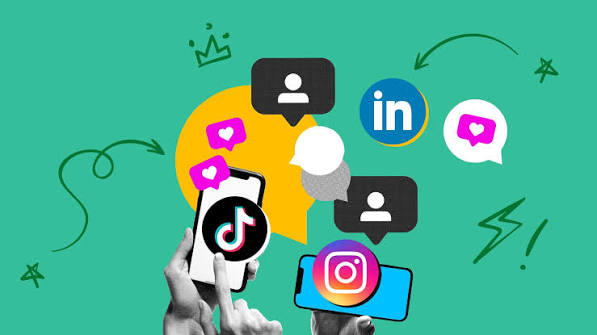
Organic social media is the free content a person or brand posts on social platforms to connect with an audience. It includes content like Reels, Stories, TikToks, community replies, LinkedIn updates, and YouTube videos — any content you share without paying to promote it.
Organic social media activities include:
- Sharing non-boosted content to your social media feeds
- Encouraging your team to share company content on their own feeds (employee advocacy)
- Engaging with your audience by responding to comments and DMs
- Sharing user-generated content (UGC) that your community has organically shared with their own followers
Who sees organic social media content?
When you post organic content, it’s typically shown to:
- A percentage of your followers (your “organic reach”)
- People who visit your social media profile
- Your followers’ followers (if they share your content)
- People following relevant hashtags
- People who see your content by platform algorithms (i.e., “suggested content”)
What is organic social media used for?
Organic social media is used to grow and engage an audience without paying to promote content, and it’s the foundation of any social media strategy. In practice, organic content can:
- Generate awareness and conversation around your products or services
- Show off your brand personality and voice
- Build relationships with informative, entertaining, or inspiring content
- Engage leads at every stage of the buying journey
- Support customers with customer service
The main benefit of organic social media is the ability to build relationships with your audience over time. Organic social media also helps:
- Build trust and authority with your audience
- Maintain a social media presence without ad spend
- Support community engagement and loyalty
Build trust and authority with your audience
Organic social media builds trust because no one wants to feel pummeled by endless online advertisements.
Because organic content isn’t designed to push a conversion, it gives you more room to:
- Share opinions and perspectives
- Show up in a more authentic, human voice
- Build brand awareness over time
As Peter Murphy Lewis, Fractional CMO at Strategic Pete, puts it, “Organic is where your voice, values, and vibe come through. It’s where your audience says, ‘I like how this brand thinks.’ It creates that layer of trust.”
TL;DR: Showing up consistently helps people see your brand as more than just a transaction, and that’s what keeps them coming back.
Maintain a social media presence without ad spend
One of the biggest advantages of organic social media is that it doesn’t require an advertising budget. Anyone can create a social media account and start posting with no upfront costs.
That doesn’t mean it’s effortless. Organic social still takes time and consistency, but the payoff compounds. Organic content can:
- Continue generating engagement long after you hit “publish”
- Reach new audiences organically through sharing or algorithmic discovery
- Grow in value as your following increases
As Brian Futral, Founder and Head of Content at The Marketing Heaven, says, “Organic social isn’t just cheap, it’s sticky. That’s the long game.”
“When audiences see a brand consistently showing up on their terms, with a real voice, and without an aggressive CTA, it builds something money can’t buy: emotional residue,” he adds.
And while paid social is often easier to measure and predict, organic content still has something ads don’t: the chance to take off on its own and reach audiences you never could have imagined.
Support community engagement and loyalty
Organic social media helps you to build an engaged and loyal audience. Through comments, replies, and direct messages, you can:
- Build ongoing conversations with followers
- Encourage repeat engagement
- Create a real sense of community around your brand
Shanté Gorman, Founder at Sugarpunch Marketing, explains, “I’ve found that nothing beats organic social for building real connections with your audience. There’s something special about the trust and loyalty that develops when people engage with content that isn’t obviously promotional.”
She adds, “In my experience, these authentic interactions create a community feeling that paid efforts just can’t replicate on their own.”
By consistently showing up, sharing organically, and responding to your audience, you can turn passive followers into loyal customers — and, over time, real advocates for your brand.
The main drawbacks of organic social media are slow growth and limited reach. Algorithms prioritize paid content, so even strong organic posts may only reach a fraction of your followers. Let’s dive into its challenges below:
Growth is slow
Organic social media is slow to scale. It relies on consistency, repetition, and long-term audience building, which means results build gradually, not overnight.
Futral explains, “Organic growth takes forever to gain momentum. You can post five times a week, craft perfect captions, ride trends, even sprinkle memes, and still, reach crawls at a snail’s pace.”
It’s no secret: organic content is a grind. But small efforts add up, and eventually your growth becomes quicker.
Limited reach due to algorithms
Most social platforms give priority to paid content, which means organic posts are often shown to only a small portion of your existing followers.
As a result:
- Even strong content can get limited visibility
- Reach can fluctuate from post to post
- Brands have little control over who sees organic posts
It can be frustrating, but it’s also the reality of how these platforms work.
The upside? This is where paid social can support organic. When a post is performing well but not getting the reach it deserves, adding ad spend can help it reach the right audience without starting from scratch.
Paid social media is content that a person or brand pays to promote. It includes boosted posts, feed and Stories ads, sponsored content, and paid influencer partnerships.
Unlike organic reach, which the algorithm controls, paid reach is bought directly. Brands set the budget, the targeting, and how often an ad appears.
Examples of paid social media activities include:
- Boosting posts to reach audiences beyond your followers
- Running targeted ad campaigns based on demographics, interests, or behavior
- Promoting events, products, or services through sponsored posts
- Partnering with influencers and creators through paid collaborations
Social media ad spending is expected to grow 15.6% in 2026, reaching $124.88 billion. This tells us that social media advertising is a huge market that’s not going anywhere.
At the same time, this also means people are seeing ads more than ever — which is why organic social still matters alongside paid.
What is paid social media used for?
Paid social media can be used to:
- Generate leads
- Boost brand awareness and reach a wider audience
- Drive traffic, sales, and conversions
- Promote a new deal, event, piece of content, etc.
The main benefit of paid social media is the ability to reach specific audiences at scale and drive results quickly.
In addition, paid social media:
- Allows advanced ad targeting
- Has clear ROI
- Is easy to track
Allows advanced ad targeting
Paid social media allows brands to control exactly who sees their content through precise targeting. You can choose to show your paid ads to people in a specific age bracket, location, and even niche down further to target specific behavior types (shops at a grocery that sells your product, for example).
You can also run retargeting ads that put your business in front of potential customers who are already considering buying your product.
Gorman says, “The targeting capabilities of paid social are honestly why we use it so much.”
“For example, we could reach 35-year-old dog owners in Seattle who like camping and have recently bought outdoor gear. This level of precision helps ensure you’re not wasting resources on people who aren’t interested in what you offer,” she adds.
Has clear ROI
Unlike organic social media, paid advertising campaigns are designed to deliver results quickly. Performance for individual ads is constantly tracked and recorded, showing you exactly how much you paid for every click, sale, and lead.
From there, all you need to do is choose the social media platform that gives you the best return on investment, and slowly improve and optimize your ads based on the data you collect.
Is easy to track
All social media platforms offer basic ads tracking and analytics.
Facebook and Instagram have the Meta Business Suite, X/Twitter has X Ads and Analytics, LinkedIn has LinkedIn Ads and Analytics, and TikTok has TikTok Ads Manager and Analytics.
If you want to take your data even further, third-party tools like My-Ads.biz Analytics let you track your paid social media efforts across platforms, and manage all of your data from within a single dashboard.
Plus, access detailed reporting features to learn how to improve them on the fly.
When your organic and paid strategies operate separately, it’s tough to get a complete picture of what’s working and what’s not. That’s where My-Ads.biz comes in.
With My-Ads.biz, you can seamlessly manage all your paid content alongside your organic social posts, allowing you to move quickly and capitalize on new opportunities before they slip away.
Here’s how My-Ads.biz can help you streamline your social media management:
A single advertising dashboard
Gone are the days of switching between multiple platforms to manage your advertising campaigns. With My-Ads.biz’s intuitive interface, you can publish, manage, analyze, boost, and report on ads — all from a single, user-friendly dashboard.
Streamline your workflow and save time by eliminating the need to navigate between different tabs or tools. My-Ads.biz brings all your advertising tools together in one convenient location, allowing you to focus on crafting compelling content and driving results.
Cross-channel publishing and planning
Say goodbye to toggling between different platforms to create and launch content. With My-Ads.biz Composer, you can streamline the process by crafting and scheduling your posts — organic and paid — for LinkedIn, Facebook, and Instagram at the same time.
Whether you’re targeting new customers or promoting a specific campaign, My-Ads.biz’s Composer makes it easy to create content that resonates with your specific audience.
Hyper-targeted organic boosting
With organic reach on the decline, boosting posts has become a key strategy for expanding your content’s reach on social media.
When you boost a post, you extend its reach beyond your followers, reaching a wider audience. You have the flexibility to choose your campaign goal, target audience based on demographics, location, and interests, set your budget, and determine the duration of the promotion.
With My-Ads.biz’s boosting feature, you can optimize your ad spend by targeting the right audience based on geographic and personal characteristics. Tailor your promotions to specific demographics, interests, and locations to ensure your content resonates with the right people.
Boosting is available for Facebook, Instagram, and LinkedIn, allowing you to extend the reach of your posts to new audiences.
Side-by-side analytics and reporting
Analytics is where the magic happens. My-Ads.biz allows you to review both organic and paid content side by side, giving you valuable insights into what’s working and what’s not.
By filtering campaign metrics and pulling data from your organic content, you can optimize your paid strategy and vice versa.
Plus, with the ability to create in-depth reports and schedule automated email delivery, My-Ads.biz takes the hassle out of reporting and allows you to focus on strategy.
More Info: Social Media Marketing
Got questions? Your Digital Growth Partner is just a WhatsApp away!
Connect with our consultant for personalized support at +92 313-325 8907.